

識別情報のエリア
レファレンスコード
タイトル
日付
- 1862-1945 (??)
記述レベル
??????
数量と媒体
29 items
コンテクストのエリア
作成者名
管理の履歴
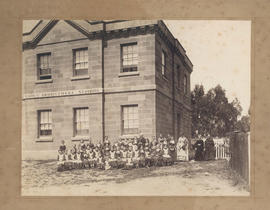
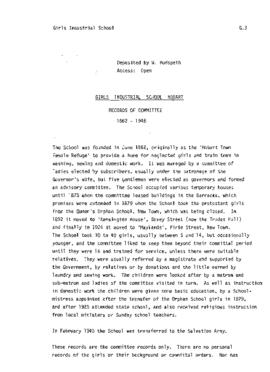
The School was founded in June 1862, originally as the 'Hobart Town Female Refuge' to provide a home for neglected girls and train them in washing, sewing and domestic work. It was managed by a committee of ladies elected by subscribers, usually under the patronage of the Governor's wife, but five gentlemen were elected as governors and formed an advisory committee. The School occupied various temporary houses until 1873 when the committee leased buildings in the Barracks, which premises were extended in 1879 when the School took the protestant girls from the Queen's Orphan School, New Town, which was being closed. In 1892 it moved to 'Kensington House', Davey Street (now the Trades Hall) and finally in 1924 it moved to 'Maylands', Pirie Street, New Town. The School took 30 to 40 girls, usually between 6 and 14, but occasionally younger, and the committee liked to keep them beyond their committal period until they were 16 and trained for service, unless there were suitable relatives. They were usually referred by a magistrate and supported by the Government, by relatives or by donations and the little earned by laundry and sewing work. The children were looked after by a matron and sub-matron and ladies of the committee visited in turn. As well as instruction in domestic work the children were given some basic education, by a Schoolmistress appointed after the transfer of the Orphan School girls in 1879, and after 1925 attended state school, and also received religious instruction from local ministers or Sunday school teachers.
In February 1945 the School was transferred to the Salvation Army.
From the Cyclopedia of Tasmania 1900 :
Thirty two years ago, under the auspices and with the active assistance of kind-hearted Lady Gore Browne, wife of the Governor of the day, the ladies of Hobart founded the Hobart Industrial School for Girls, an institution that has had an uninterrupted career of usefulness and success ever since. Its objects at first were mainly to reclaim the fallen, but after some experience it was wisely decided to take the young and train them in those paths which only lead to pleasantness and peace. There was no written constitution at the outset, but the principles under which it continued to be managed were, in 1890, embodied in a document which set forth :—" 1. That the school shall be for the education, maintenance, and training of such classes of children as described in the Industrial Schools Act, 1867. 2. That there shall be five governors elected to remain in office until their successors are appointed. That all subscribers be empowered to vote in the election of such Governors. 3. That the management and control of the school be vested in a committee of not less than ten, nor more than twenty, ladies, to be elected by the donors and subscribers. 4. That the committee of management have power to remove officers and fix salaries, and that they shall submit an annual report in January of each year." The class of girls admitted into the school consists of poor and unprotected children, who are sent by the administrator of charitable grants (Mr. F. R. Seager.) They range from very young children upwards, and no girl is allowed to leave the institution till she is sixteen years of age. The Government contribute 5s. per week for each child for the specified time she is committed to the care of the institution, in some cases two years and some five years. They are then supported until they leave by the funds of the institution. When an inmate is sufficiently trained for private service, arrangements are made by the committee in connection with the matron, for her discharge, to such employment as may seem fit, subject in each case to the approval of the managers. Instruction is given in reading, writing, and arithmetic, needlework, laundry work, cooking, and general housework. The school is Protestant unsectarian. About forty children pass through it each year. Of late years the subscriptions have been falling off, but the school is still sound financially, though more funds are required for special cases. The building now occupied as a school (formerly Kensington House), has cost over £4000, which has been practically paid for. It is well situated in Davey Street, and in every way suitable for the purpose. Among the pioneer workers who rendered special service to the school for years was Mrs. Crowther, widow of the late Hon. Dr. Crowther, who is still alive in England. The venerable honorary secretary, Mrs. Harriet M. Salier, has filled that position since the inception of the school. For thirty-two years she has devoted herself to forwarding its best interests, not only as secretary, but in every direction possible, and it has been and is with her truly " a labour of love." Her son, Mr. Fred. J. Salier, has been honorary treasurer for twenty years, and has also rendered most valuable service to the institution. The present president, Mrs. Hardy, daughter of Sir Henry Edward Fox Young, one of our late governors, is most indefatigable in attending to the interests of the school. Officers for 1899-1900 :— Patroness, Lady Gormanston ; president, Mrs. Hardy ; governors, Messrs. G. Patten Adams, Justice Clark, C. J. Maxwell, Fred. J. Salier, Hon. W. Crosby ; hon. treasurer, Fred. J. Salier ; committee, Mesdames G. Adams, James, Barnard, Barrett, D. Barclay, E. Burgess, H. Chapman, W. Crosby, E. L. Crowther, Cook, Kite, Davies, Montgomery, J. G. Parker, Perkins, C. J. Maxwell, Hudspeth, Bernard Shaw, Miss Nutt; hon. secretary, Mrs. Harriet M. Salier; hon. auditor, Mr. R. M. Johnston ; trustees, Messrs. Chas. Butler, C. E. Walch, F. J. Salier.
直接の取得先または移管元
Deposited by W. Hudspeth
内容と構造のエリア
範囲と内容
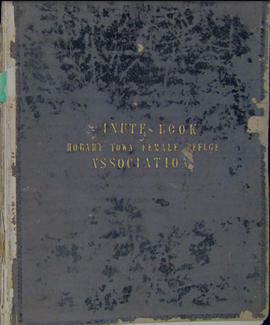
Collection consists of management committee records, admissions register and accounts of the Girls Industrial School Hobart, also 2 photographs.
評価選別、廃棄、スケジュール
追加資料
編成システム
アクセスの条件のエリア
アクセスの条件
Open
複製の条件
This material is made available for personal research and study purposes under the University of Tasmania Standard Copyright Licence. For any further use permission should be obtained from the copyright owners. For assistance please contact Special.Collections@utas.edu.au
When reusing this material, please cite the reference number and provide the following acknowledgement:
“Courtesy of the UTAS Library Special & Rare Collections”
言語資料
資料のスクリプト
言語とスクリプトの注記
物理的特徴と技術的要件
検索手段
原本の存在と所在
コピーの存在と所在
関連する記述記述単位
出版物の注記
Find & Connect website - https://www.findandconnect.gov.au/guide/tas/TE00068
出版物の注記
Tasmanian Archives: Register - Boys' Home; Girls' Industrial School; St Joseph's Orphanage; Hobart Training School; Launceston Female Industrial School, Boys' Training School - https://stors.tas.gov.au/AI/SWD37-1-2
出版物の注記
Tasmanian Archives: Upper Macquarie St Girls Industrial School) 1869; Girls (Hobart Training School Barracks) 1882-1883; Girls and Boys (St Joseph's Orphanage) 1879 - https://stors.tas.gov.au/SWD37-1-1$init=SWD37-1-1-p19
出版物の注記
Army Museum of Tasmania: The Hobart Girls Reformatory (1881-1905) & The Hobart Industrial Girls School (located at the Barracks from 1873-1892) - http://armymuseumtasmania.org.au/wp-content/uploads/2015/10/No-14-Hobart-Girls-Reformatory.pdf
出版物の注記
The Mercury Hobart Tuesday 28 November 1871 - Hobart Town Industrial School for Girls https://trove.nla.gov.au/newspaper/article/8869572
出版物の注記
Life a s a child in care - orphanages and children in care, charitable institutions, community welfare organisations https://libraries.tas.gov.au/family-history/Pages/Child-in-care.aspx
別の識別子
アクセスポイント
主題アクセスポイント
場所のアクセスポイント
名称アクセスポイント
ジャンルのアクセスポイント
記述の識別子
機関識別子
ルールおよび使用した規則
状態
詳細さの水準
日付の作成 訂正 削除
CE September 2018